

Fast food and healthy eating rarely get mentioned in the same sentence, but that is exactly the gap this drive-thru chain has managed to fill. Built around speed, affordability, and fresh ingredients, it has grown from a small regional idea into one of the more talked-about names in quick-service dining. This article breaks down what makes the concept work, what you can expect to find, and why so many people keep coming back for another visit.
What Makes This Concept Different
Most fast food chains built their reputation on burgers, fries, and drive-thru speed, while salad bars stayed stuck in grocery stores and sit-down restaurants. This brand combined both worlds. It runs small, drive-thru-only locations with no indoor seating, which keeps operating costs low and allows prices to stay noticeably lower than typical salad-focused restaurants.
That format is a big part of why the salad and go menu feels so different from competitors. Instead of paying premium prices for a bowl of greens, customers get chef-designed recipes at a price point closer to a value meal than a sit-down lunch. It is a simple idea, but very few chains have executed it at this scale.
A Look at the Background
The company started with a straightforward goal: make fresh food accessible without the long wait times or high prices usually attached to healthier eating. Rather than opening large restaurants with dine-in space, the founders leaned into a compact drive-thru model that could be built quickly and operated efficiently.
That decision shaped everything about how the business grew. Lower real estate and staffing costs meant savings could be passed along to customers, which is reflected clearly across the salad and go menu today. Over time, the chain expanded beyond its original home base into several additional states, building a loyal following among people who wanted something better than typical drive-thru fare without paying restaurant prices for it.
Community involvement has also played a role in the brand’s identity. The company has been recognized for workplace culture and customer service, which says something about how the business operates behind the counter, not just what shows up in the bag.
Breaking Down the Salad and Go Menu
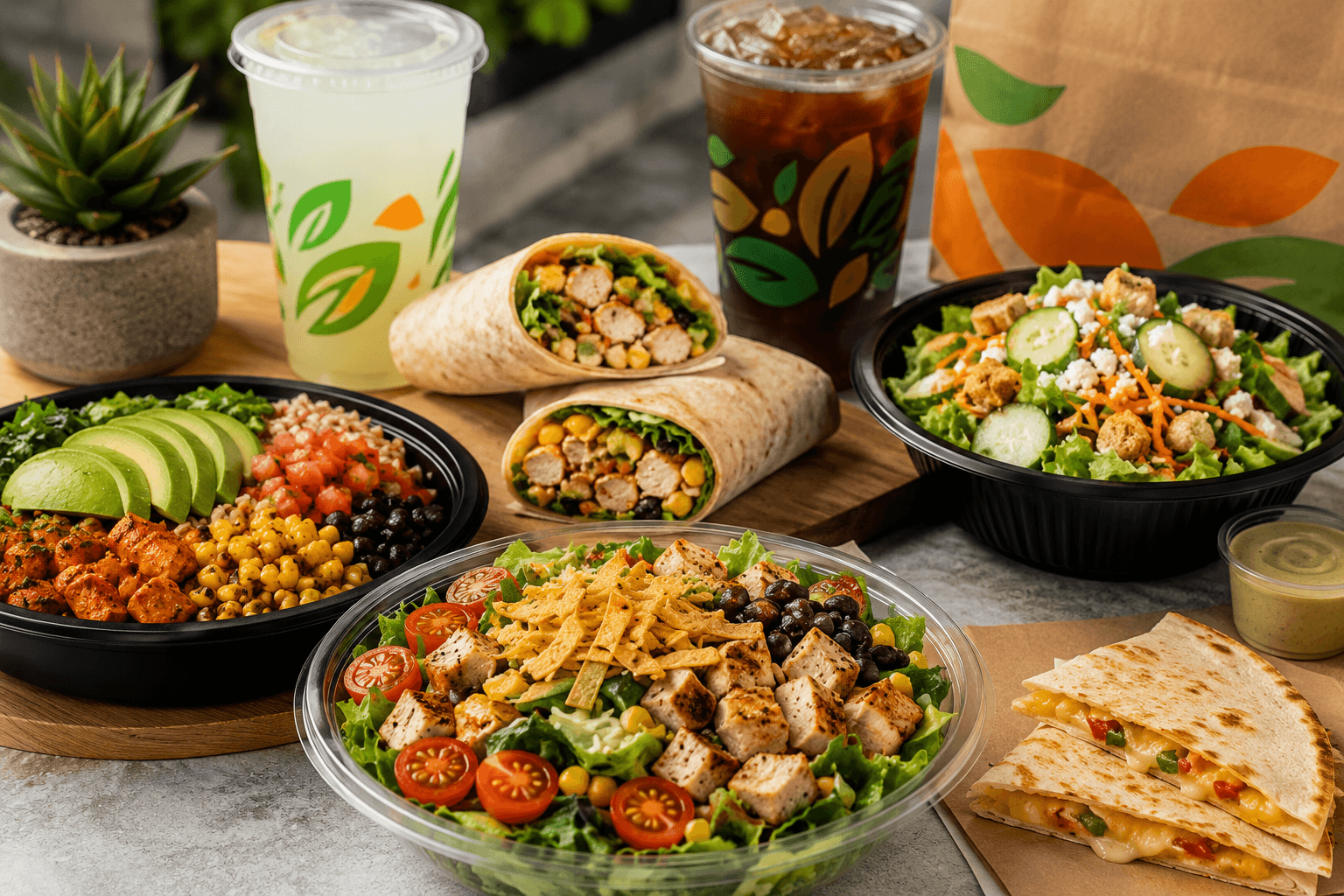
The core of the salad and go menu is, unsurprisingly, salads. Classic options like a Caesar salad and a Cobb salad sit alongside more inventive combinations that rotate in and out depending on the season. Each one can typically be customized with a protein choice, whether that means roasted chicken, a plant-based option, or something more indulgent depending on what is currently available.
Wraps follow a similar structure, offering many of the same flavor combinations found in the salads but in a more portable format. This matters for anyone eating in the car or heading straight into a workday, since wraps are easier to manage one-handed than a full bowl of greens and toppings.
Grain bowls have become an increasingly important part of the lineup as well. These tend to lean heavier and more filling than a traditional salad, combining grains, vegetables, and protein into something closer to a full meal rather than a side dish. For customers looking for more substance without moving away from fresh ingredients, this section of the salad and go menu tends to be the first place they look.
Breakfast Options Worth Knowing About
Mornings get their own dedicated lineup, separate from the salads and wraps that dominate lunch and dinner. Breakfast burritos are a signature item, packed with eggs, cheese, and a choice of fillings that range from simple to fairly hearty. These items are designed to travel well, which fits the drive-thru format perfectly.
Beyond burritos, the breakfast portion of the salad and go menu includes lighter options like breakfast bowls and quesadillas for anyone who wants something quicker or less filling. Protein content has become a bigger focus in recent menu updates, with some burrito options built specifically around higher protein counts to appeal to customers tracking their intake more closely.
Coffee and other morning beverages round out the breakfast selection, giving customers a reason to stop even if they are not looking for a full meal.
Drinks and Smaller Bites
Beverages play a bigger role here than at many competing chains. Cold brew coffee has become one of the more popular items on the drink side, along with fresh lemonades, teas, and rotating seasonal flavors. Most drink options stay relatively low in calories, which fits the overall positioning of the brand as a lighter alternative to typical fast food.
Smaller snack items, including quesadillas and other quick bites, have been added over time to give customers more flexibility. These are useful for anyone who wants something to pair with a drink or a lighter option without committing to a full salad or wrap.
Pricing and Value
One of the most consistent themes across the salad and go menu is affordability. Many items sit well under the price of a typical sit-down salad, with a range that spans from simple sides costing just a couple of dollars up to more substantial bowls and combos in the seven to nine dollar range. This pricing structure is a direct result of the compact drive-thru model, which keeps overhead costs down without cutting corners on ingredients.
For families or larger groups, the value adds up quickly. A stop that might cost significantly more at a traditional healthy-eating restaurant becomes far more reasonable here, which is a major reason the brand has built such a loyal following among budget-conscious customers who still care about what they are eating.
Seasonal and Limited-Time Additions
The menu does not stay static throughout the year. New items are regularly introduced, often tied to seasonal ingredients or shifting food trends. Recent additions have included globally inspired flavor combinations, bolder sauces, and items designed around current nutrition trends like higher protein content.
This rotation keeps regular customers interested and gives the brand a reason to stay in the conversation even among people who already have a usual order. Checking for limited-time items before a visit is a good habit for anyone who wants to try something new rather than defaulting to the same salad every time.
Customization and Dietary Options
Flexibility is one of the stronger selling points here. Most salads, wraps, and bowls can be adjusted to fit different dietary preferences, whether that means swapping proteins, adding extra vegetables, or leaving off specific ingredients entirely. Vegetarian options are available across multiple categories, and the customizable nature of most items makes it easier to build something that fits personal preferences without needing a completely separate menu section.
This kind of flexibility is part of what keeps the salad and go menu appealing to a wide range of customers, from people following specific eating plans to those who simply know what they like and want it prepared a certain way.
Ordering, Rewards, and Convenience
Since the format is drive-thru only, ordering is designed to move quickly. Most locations are built for fast turnaround, which fits the expectations customers already bring from traditional fast food while still delivering a noticeably different product once the order actually reaches the window.
A rewards program adds another layer of value for frequent visitors, offering perks and occasional discounts for people who order regularly. Mobile ordering and app-based accounts have also made it easier to skip some of the wait, particularly during busier parts of the day. Catering and bulk ordering options exist as well, which extends the concept beyond individual visits into office lunches or group events.
Why the Concept Keeps Growing
The simplest explanation for the brand’s continued expansion is that it solves a real problem. People want food that is fast without being unhealthy, and they want it at a price that does not feel like a splash-out purchase reserved for special occasions. By keeping the format small and efficient, the company has been able to offer that combination consistently across new markets as it grows.
The lineup reflects that philosophy in nearly every item, from the affordable pricing to the rotating seasonal additions that keep things from feeling repetitive. It is not trying to reinvent fast food entirely. It is simply applying fast food logistics to a category that had mostly ignored speed and affordability in favor of a more premium, sit-down experience.
Final Thoughts
What makes this brand worth paying attention to is not any single standout item, but the overall approach. Fresh ingredients, a compact drive-thru format, and consistently low prices combine into something that feels genuinely different from both traditional fast food and typical healthy-eating restaurants. Whether someone is stopping for a quick breakfast burrito or building a custom dinner salad, the experience stays consistent and reasonably priced.
Anyone curious about trying it for the first time should expect a quick, no-frills visit built around a menu that changes just enough to stay interesting without straying from what made it popular in the first place.
Frequently Asked Questions
What is typically included on the salad and go menu? It includes a rotating selection of salads, wraps, grain bowls, breakfast burritos, quesadillas, and a range of beverages like cold brew coffee and fresh lemonades.
Is the food actually healthy, or just marketed that way? The focus is on fresh ingredients, customizable proteins, and reasonable calorie counts, though individual nutritional value depends on toppings and dressing choices selected during ordering.
Are there vegetarian or plant-based options available? Yes, most salads and wraps can be customized with plant-based proteins or extra vegetables to fit different dietary preferences.
Why are prices lower compared to other salad-focused restaurants? The compact drive-thru format keeps real estate and staffing costs down, and those savings are passed along directly to menu pricing.
Does the salad and go menu change throughout the year? Yes, new seasonal items and limited-time offerings are introduced periodically, often reflecting current food trends and available produce.
Can I order in bulk for a group or event? Yes, catering and bulk ordering options are typically available for anyone planning a larger group order or office event.
