

The internet is full of terms that suddenly gain attention and spark curiosity among users. Some keywords appear in online discussions, search trends, forums, digital communities, and niche industries before becoming widely recognized. One such term that has attracted interest is dep sek.
Many people search for this phrase because they want to understand what it means, where it comes from, and why it appears in various online contexts. While the term may not yet have a universally accepted definition, its growing presence in digital conversations has encouraged people to learn more about it.
Understanding emerging concepts is important because language, technology, and online culture constantly evolve. New expressions, technical terms, and niche concepts often begin in small communities before reaching a broader audience.
This article explores dep sek in detail, including its possible meanings, digital relevance, practical applications, benefits, and the reasons behind increasing public interest.
What Is Dep Sek?
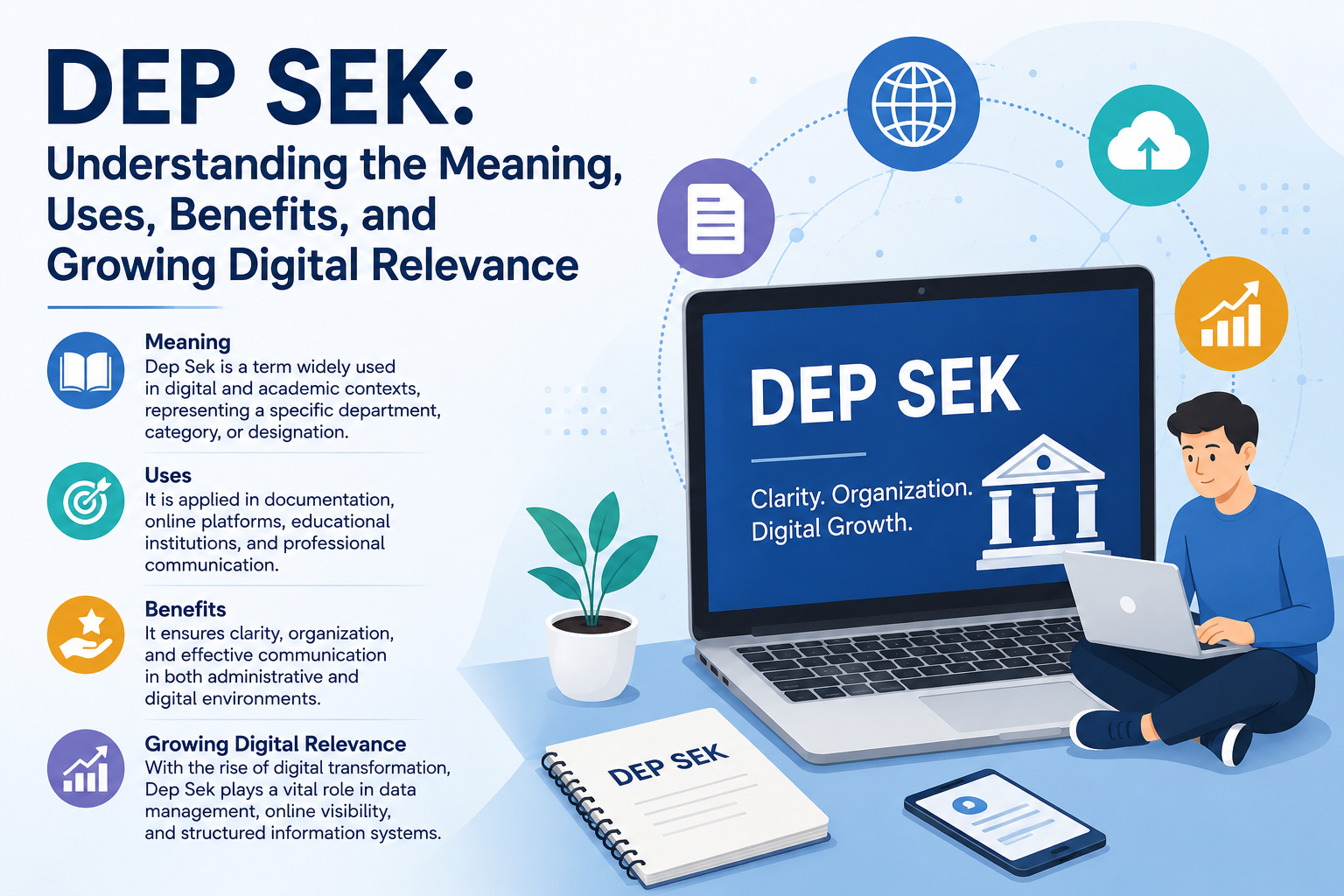
At its core, dep sek can be viewed as a modern digital term that represents a specialized concept, process, system, or online topic depending on the context in which it is used.
Like many emerging keywords, its interpretation may vary among industries, communities, and platforms. Some users encounter it while researching technology-related subjects, while others may discover it through digital content, online discussions, or specialized projects.
The growing curiosity surrounding this phrase reflects a broader trend in which internet users actively seek information about new concepts before they become mainstream.
As digital ecosystems continue to expand, terms such as this often gain recognition through search engines, social platforms, blogs, forums, and educational resources.
Why New Digital Terms Become Popular
The internet has dramatically changed how language develops. Decades ago, new terminology often spread through academic publications, industry conferences, or traditional media.
Today, a new concept can gain attention within days through social media conversations, online communities, and content-sharing platforms.
Several factors contribute to the popularity of emerging terms:
Increased internet usage allows information to spread rapidly across different regions.
Digital communities frequently create new terminology to describe specific ideas, tools, or processes.
Search engines encourage users to explore unfamiliar topics, creating additional interest and visibility.
Content creators often discuss trending subjects, introducing new audiences to previously unknown concepts.
As a result, phrases that once existed only within small groups can quickly become part of larger conversations.
The Role of Search Behavior in Topic Discovery
Modern search behavior reveals how curious people are about unfamiliar concepts. When users encounter a new term, their first instinct is often to search for explanations, examples, and practical applications.
This behavior helps emerging keywords gain traction over time.
Search engines analyze user interest, identify patterns, and surface content that addresses common questions. As more people search for a topic, additional content is created, which further increases visibility.
The popularity of dep sek demonstrates how online curiosity contributes to the development of digital knowledge and awareness.
Dep Sek is becoming a topic of interest among internet users who want to understand its meaning and digital relevance. Dep Sek appears in online discussions, blogs, and search trends as people explore emerging concepts. Many experts believe Dep Sek could be associated with modern digital systems and information management. Learning about Dep Sek helps users stay informed about evolving technology. Businesses and content creators may also explore Dep Sek for future opportunities. As online awareness grows, Dep Sek may gain wider recognition. Understanding Dep Sek today can help individuals prepare for tomorrow’s digital landscape and innovations.
Digital Innovation and Emerging Concepts
The digital world evolves at an extraordinary pace. Innovations in software development, cloud computing, artificial intelligence, cybersecurity, blockchain technology, and online communication continuously introduce new terminology.
Many concepts initially seem unfamiliar but later become standard industry language.
For example, terms such as machine learning, cloud storage, digital transformation, and virtual collaboration were once considered niche concepts. Today, they are widely understood across industries.
Emerging phrases often follow a similar path. They begin with limited recognition and gradually gain acceptance as more people learn about them.
Possible Applications in Modern Environments
One reason people become interested in dep sek is the possibility that it may relate to modern digital processes or organizational systems.
In today’s technology-driven environment, businesses and individuals rely on structured workflows, efficient communication methods, and data-driven decision-making.
Concepts associated with these goals often attract attention because they address real-world challenges.
Whether applied to information management, digital strategy, workflow optimization, or online collaboration, emerging concepts frequently gain value when they solve practical problems.
The growing interest in this keyword suggests that users are exploring its potential relevance in professional and technological contexts.
The Importance of Understanding New Concepts
Learning about unfamiliar topics provides several advantages.
First, it encourages intellectual curiosity and continuous learning. Individuals who actively explore new ideas often adapt more effectively to changing environments.
Second, understanding emerging terminology improves communication. Professionals who stay informed can participate more confidently in industry discussions.
Third, knowledge helps individuals identify opportunities. Many innovations begin as niche concepts before becoming significant trends.
By exploring new ideas early, people can better prepare for future developments and technological advancements.
How Technology Influences Modern Knowledge
Technology has transformed how information is created, distributed, and consumed.
In the past, learning often depended on textbooks, libraries, and formal educational institutions. While these resources remain valuable, digital platforms have dramatically expanded access to knowledge.
Today, users can explore emerging topics through blogs, podcasts, webinars, online courses, research publications, and community forums.
This accessibility allows concepts such as dep sek to gain visibility among diverse audiences.
As technology continues to evolve, information-sharing mechanisms become even more efficient, helping new ideas spread faster than ever before.
Online Communities and Knowledge Sharing
Online communities play a major role in the growth of emerging concepts.
Discussion platforms, professional networks, educational groups, and industry forums create spaces where people exchange ideas and experiences.
These communities often serve as early adopters of new terminology.
Members discuss practical applications, provide insights, and contribute to collective understanding.
As conversations expand, search interest grows, leading more users to seek information about specific topics.
The process creates a cycle in which discussion generates awareness, awareness generates content, and content generates further discussion.
The Relationship Between Innovation and Curiosity
Innovation and curiosity are closely connected.
Most technological breakthroughs begin with questions. Individuals explore possibilities, challenge assumptions, and experiment with new approaches.
Curiosity drives research, learning, and discovery.
When people encounter unfamiliar concepts, they naturally want to understand their significance. This desire for knowledge contributes to the popularity of emerging keywords.
The increasing attention given to dep sek reflects this broader human tendency to seek understanding and stay informed about evolving ideas.
Potential Benefits of Exploring Emerging Topics
Exploring new concepts offers several practical benefits.
Individuals gain a broader understanding of digital trends and industry developments.
Professionals improve their ability to adapt to changing market conditions.
Businesses identify opportunities for innovation and growth.
Students expand their knowledge and strengthen critical thinking skills.
Researchers discover new areas for investigation and analysis.
These advantages demonstrate why learning about unfamiliar topics remains valuable even when their definitions continue to evolve.
The Future of Digital Terminology
The future will likely bring thousands of new concepts, technologies, and expressions.
Artificial intelligence, automation, extended reality, quantum computing, and advanced data analytics are already introducing new vocabulary into everyday conversations.
As innovation accelerates, the pace of linguistic evolution will continue to increase.
Many emerging terms may disappear over time, while others become essential components of professional communication.
Understanding this process helps individuals appreciate the dynamic nature of language and technology.
Challenges Associated With Emerging Concepts
Not every new term immediately gains a clear definition.
One challenge involves inconsistent interpretation. Different communities may use the same phrase in different ways.
Another challenge is limited information. Early-stage concepts often lack comprehensive documentation or standardized explanations.
This uncertainty can create confusion among users seeking accurate information.
However, ongoing discussion, research, and content creation gradually improve clarity and establish shared understanding.
Over time, communities often develop common definitions that support broader adoption.
Building Awareness Through Education
Education remains one of the most effective ways to improve understanding of emerging topics.
Educational resources help users evaluate information critically and distinguish between speculation and evidence-based knowledge.
Organizations, educators, and content creators all contribute to this process by producing informative content that explains new concepts in an accessible language.
As awareness grows, users become more confident in their ability to understand and discuss unfamiliar subjects.
This process strengthens digital literacy and encourages informed participation in modern technological environments.
Why Interest Continues to Grow
Interest in dep sek continues to grow because people are naturally drawn to topics that appear new, unique, or potentially significant.
Search activity often reflects a desire to understand trends before they become mainstream.
Users want practical explanations, real-world context, and reliable insights.
The combination of curiosity, technological change, and expanding digital communication channels creates an environment where emerging concepts can attract substantial attention.
As more information becomes available, understanding will likely continue to improve.
Conclusion
The rise of dep sek highlights how digital culture constantly introduces new ideas, concepts, and terminology. While its exact interpretation may vary depending on context, the growing interest surrounding the term reflects broader trends in online learning, technological innovation, and information discovery.
In a world where knowledge evolves rapidly, staying informed about emerging topics provides valuable advantages. Whether viewed through the lens of digital transformation, online communication, technological development, or intellectual curiosity, understanding new concepts helps individuals remain adaptable and informed.
As the internet continues to shape how information spreads, terms like dep sek remind us that learning is an ongoing process. Exploring unfamiliar ideas today can lead to deeper understanding, better opportunities, and greater readiness for the innovations of tomorrow.
